
Cybersecurity and risk management
Reinforce cybersecurity across your connected medical devices
As medical devices become more connected, cybersecurity requires more than visibility into vulnerabilities. A coordinated approach helps healthcare organizations identify, prioritize, and address risks while supporting patient care, operational continuity, and compliance.


Gain clarity, reduce risk, and protect care
Effective cybersecurity means identifying risks early, safeguarding devices and data with multi-layered defenses, and ensuring fast, coordinated response and recovery.
Cybersecurity isn’t a separate layer. It needs to be integrated into the workflows that support medical devices throughout their lifecycle.
By connecting cybersecurity, service, compliance, and lifecycle management within the Intelas ecosystem, health systems can align security activities with day-to-day healthcare technology management operations, helping turn cybersecurity insights into meaningful risk reduction across connected medical devices.
Identify
Regular scans and evaluations identify vulnerabilities early, enabling us to stay ahead of potential threats.
Protect
Multi-layered defenses including firewalls, MFA, and network segmentation provide robust protection.
Detect
Real-time monitoring tools detect suspicious activity, preventing breaches before they happen.
Respond
Rapid response plans ensure swift action during ransomware attacks or operational disruptions.
Recover
Regular backups and tested recovery plans ensure you're prepared for any security breach.
Security integrated into your medical device environment
Connected medical devices require a cybersecurity strategy that extends beyond risk identification to support ongoing risk reduction.
CyberHUB delivers proactive monitoring, real-time risk management, and clear visibility into connected medical devices. More importantly, it helps close the gap between identifying risk and reducing it through a dedicated Cyber Defense Team that remains engaged from initial detection through remediation.
Unlike visibility-only solutions that stop at discovery and risk scoring, CyberHUB helps healthcare organizations prioritize and address vulnerabilities within the operational realities of patient care environments. The result is a cybersecurity program that turns visibility into action and supports measurable risk reduction.
CyberHUB in action over the last 12 months
- 82,000+ connected medical devices monitored
- 670,000+ potential vulnerabilities identified and resolved
- 10,400+ medical devices moved to low-risk status through active remediation
- Dedicated Cyber Defense Team supporting risk prioritization, remediation, and resolution

Support to reduce risk and improve efficiency
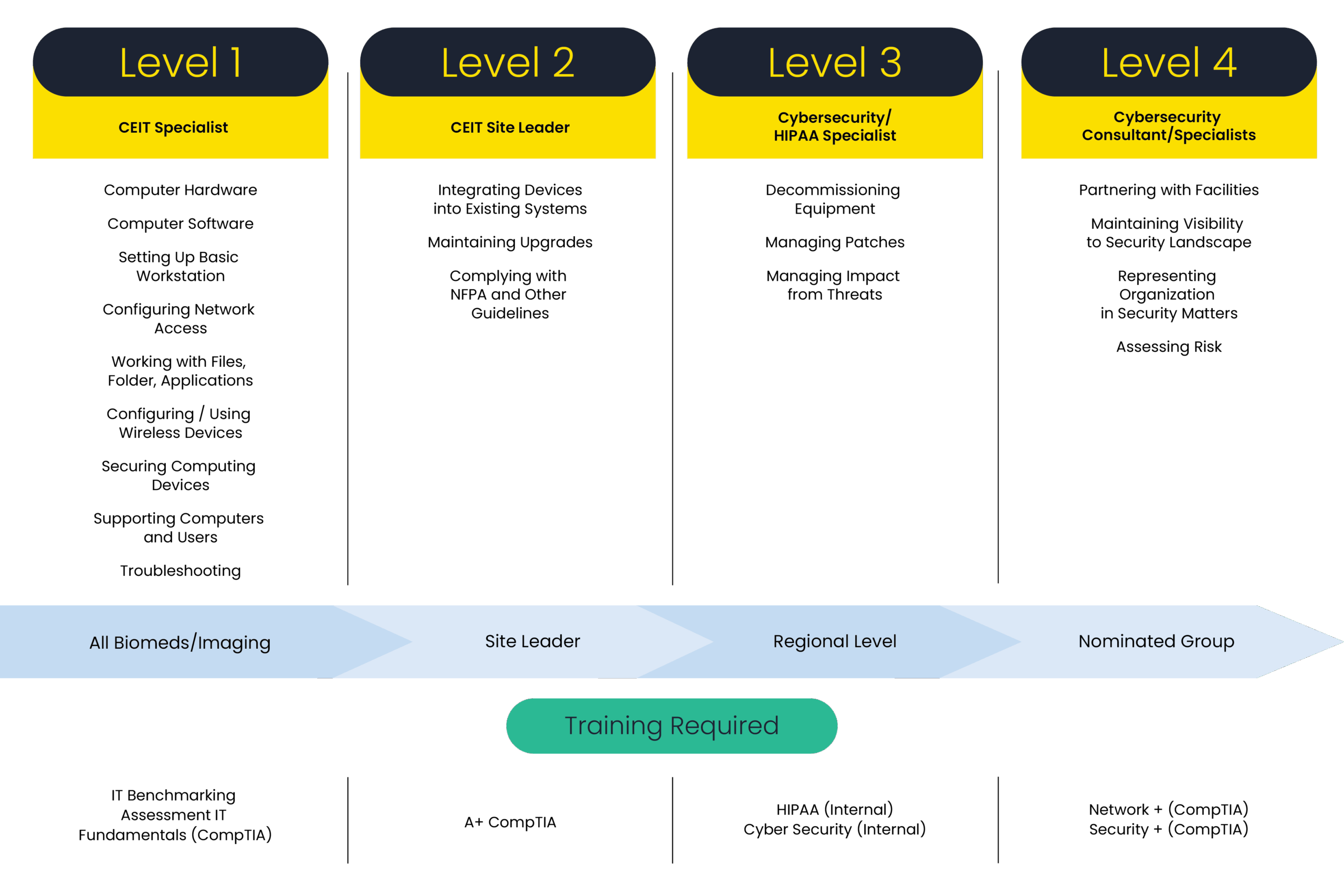
Advancing cyber readiness through targeted training
Advanced cybersecurity training is built into our development program, with clear pathways to roles such as CE-IT Site Leader, Cybersecurity/HIPAA Specialist, and Cybersecurity Consultant.
We bring proven strength in vulnerability management and security operations to every site we support—delivering the confidence your team needs to manage risk, ensure compliance, and protect care without disruption.
Utilization and disposition: The Intelas difference
01
Real-time device insight to reduce risk
CyberHUB platform powered by Asimily technology for real-time device visibility and threat detection.
02
Identify and act on high-risk assets
Our scoring model surfaces the riskiest assets, prioritizing security efforts where they matter most to patient care.
03
Coordinated response across teams
Expert guidance from our Cyber Defense Team, working in coordination with clinical, IT, and vendor teams for rapid, unified response.
04
Cyber risk strategy integrated into HTM
Risk reduction strategy embedded into daily HTM operations to minimize downtime and prevent cybersecurity incidents.
05
Certified cyber proficiency across HTM teams
Tiered IT training and CE-IT certification ensure frontline technicians and engineers are equipped to support cybersecurity initiatives.
Turn a program assessment into a systemwide advantage
What’s next?
Start the path to smarter asset management. With one call, we can start to help you balance cost control, maximize uptime, and bring strategy back to capital planning.
Together we’ll explore how systemwide service alignment can reduce fragmentation, elevate performance, and support stronger outcomes.