The Complete Guide to the People, Processes and Technology That Keep Healthcare Moving
Every day, hospitals rely on thousands of medical devices to diagnose patients, deliver treatment and support clinical care. From the infusion pump delivering medication to the MRI system helping diagnose disease, healthcare technology touches nearly every patient interaction.
When that technology isn’t available, patient care, clinician productivity and hospital operations can all be affected.
Behind every device are the people, processes and technology working together to ensure it is safe, reliable, secure and available when clinicians need it.
Healthcare Technology Management brings those people, processes and technologies together to manage healthcare technology throughout its lifecycle—from planning and acquisition to deployment, maintenance, cybersecurity, optimization and replacement.
Whether maintaining a patient monitor, supporting an MRI system, protecting connected medical devices from cyber threats or helping hospitals make smarter capital investment decisions, HTM plays an essential role in keeping healthcare moving.
Quick Answer
HTM is responsible for planning, maintaining, securing and optimizing healthcare technology throughout its lifecycle—from acquisition and deployment to maintenance, cybersecurity, asset management and replacement.
The goal of HTM is to ensure healthcare technology is safe, reliable, available and ready to support patient care.
What You’ll Learn
In this guide, you’ll learn:
- What HTM is
- Why HTM is important
- How HTM improves hospital performance
- Who works in HTM
- How HTM differs from clinical engineering and biomedical engineering
- What responsibilities are included in HTM
- Where HTM takes place
- How HTM continues to evolve
What Is HTM?
HTM manages the complete lifecycle of healthcare technology, helping healthcare organizations keep it safe, reliable, secure and available throughout its useful life.
As hospitals have become more connected and technology has become more complex, the role of HTM has expanded. Today, it supports everything from maintaining medical equipment and managing cybersecurity risks to informing capital planning and helping healthcare organizations make better technology decisions.
Why Is HTM Important?
Keeping healthcare technology ready for patient care requires more than maintaining medical equipment.
Devices must be maintained, inspected, secured and managed throughout their lifecycle. As hospitals become more connected and technology continues to evolve, HTM has become an essential part of supporting patient care and hospital operations.
How Does HTM Improve Hospital Performance?
By ensuring healthcare technology is safe, available and operating at peak performance, HTM helps hospitals strengthen clinical operations, improve financial stewardship and create a better experience for both clinicians and patients.
Effective HTM programs increase equipment uptime, reduce unplanned downtime and improve the utilization of medical technology across the enterprise. They also strengthen medical device cybersecurity, provide the data needed for informed capital planning and help healthcare organizations make smarter investment decisions throughout the technology lifecycle. For clinicians, that means spending less time searching for equipment, waiting for repairs or working around unavailable devices, and more time focused on patient care.
As healthcare technology becomes increasingly connected and complex, HTM helps healthcare organizations keep medical technology safe, available and performing reliably. Rather than simply maintaining equipment, it helps organizations improve technology performance, strengthen cybersecurity and make more informed investment decisions.
Who Works in HTM?
HTM brings together professionals with expertise across multiple areas of healthcare technology.
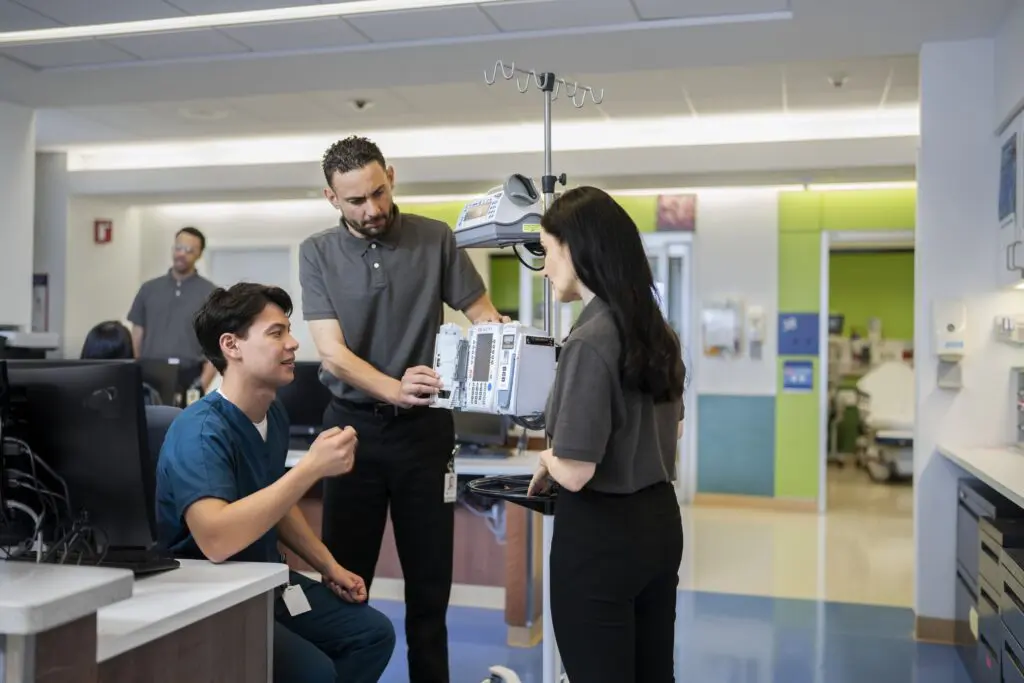
These roles may include Biomedical Equipment Technicians (BMETs), Clinical Engineers, Imaging Technology Specialists, Medical Device Cybersecurity Specialists, Healthcare Technology Leaders and Data Analysts. Together, they help ensure medical technology is safe, reliable, secure and available throughout its lifecycle.
What Is the Difference Between HTM, Clinical Engineering and Biomedical Engineering?
These terms are closely related, but they are not interchangeable.
HTM is the broad practice of managing healthcare technology throughout its lifecycle. It encompasses medical equipment maintenance, imaging technology, cybersecurity, asset management, lifecycle planning and capital strategy.
Clinical Engineering focuses on applying engineering principles to improve the safety, effectiveness and performance of healthcare technology.
Biomedical Equipment Management focuses on maintaining, inspecting and repairing medical devices used in patient care.
Biomedical Engineering generally refers to the design, development and innovation of medical technology rather than managing technology already in use within a healthcare organization.
HTM isn’t maintenance—it’s lifecycle management.
What Does HTM Include?
HTM spans the entire lifecycle of healthcare technology.
Capital Planning
HTM provides the operational and financial insights needed to prioritize technology investments based on equipment condition, utilization, maintenance history, clinical importance, risk and remaining useful life.
Procurement
HTM professionals help healthcare organizations make smarter purchasing decisions by evaluating how new technology will perform throughout its lifecycle—not just at the time of purchase. This includes assessing equipment functionality, service requirements, compatibility with existing systems, vendor support and total cost of ownership.
After purchase, HTM supports installation, acceptance testing, connectivity, documentation and user training.
Medical Equipment Maintenance
Planned maintenance, corrective maintenance, safety inspections, calibration, performance verification and regulatory compliance remain foundational responsibilities of HTM.
Imaging Technology Management
HTM also supports the lifecycle management of advanced imaging technologies including MRI, CT, X-ray, ultrasound, nuclear medicine and PET systems. Responsibilities include preventive and corrective maintenance, performance testing, vendor coordination, technology upgrades, capital planning, cybersecurity risk management and equipment uptime optimization.
Medical Device Cybersecurity
As medical devices become increasingly connected, cybersecurity has become an essential part of HTM. Responsibilities include device inventory, vulnerability management, risk assessment, remediation planning, incident response and collaboration with IT and cybersecurity teams.
Healthcare Asset Management
Hospitals manage thousands of mobile and connected assets. HTM helps organizations understand what equipment they own, where it is located, how it is being utilized and when it should be replaced.
Where Does HTM Take Place?
It supports virtually every healthcare environment, including hospitals, health systems, academic medical centers, ambulatory surgery centers, outpatient clinics, imaging centers, physician practices, specialty hospitals and long-term care facilities.
Wherever healthcare technology supports patient care, HTM plays a critical role.
How Has HTM Evolved?
HTM has evolved significantly over the past several decades. What was once viewed primarily as a repair function has expanded to encompass connected technologies, medical device cybersecurity, imaging systems, data analytics, lifecycle planning and capital strategy.
HTM extends well beyond maintaining medical equipment. It brings together engineering expertise, data analytics, cybersecurity, connected technologies and artificial intelligence to help healthcare organizations make more informed decisions throughout the technology lifecycle. At the same time, effective HTM still depends on the fundamentals—strong troubleshooting, clear communication and close collaboration with clinicians, IT teams and hospital leadership.
The focus has shifted from asking, “How quickly can we fix the equipment?” to asking, “How can we optimize healthcare technology to improve patient care and hospital performance?”.
The Future of HTM
HTM will be shaped by artificial intelligence, predictive analytics, real-time asset visibility, remote monitoring, medical device cybersecurity and intelligent lifecycle management.
It is no longer solely about repairing medical equipment. It is about helping healthcare organizations maximize the safety, availability, performance and value of every technology investment. As healthcare continues to evolve, HTM will play an increasingly important role in supporting better patient care, stronger operational performance and more informed technology decisions.
Healthcare Technology Management (HTM) FAQs
What does HTM stand for?
HTM stands for Healthcare Technology Management. It is the discipline responsible for managing medical technology throughout its lifecycle—from planning and procurement to maintenance, cybersecurity, asset management, capital planning and replacement.
Is HTM the same as clinical engineering?
No. Clinical engineering is an important specialty within Healthcare Technology Management, but HTM encompasses a broader range of responsibilities. In addition to clinical engineering, HTM includes biomedical equipment management, imaging technology management, medical device cybersecurity, asset management, lifecycle planning and capital planning.
What is a BMET?
A Biomedical Equipment Technician (BMET) is an HTM professional who installs, inspects, maintains, troubleshoots and repairs medical equipment. BMETs help ensure medical devices are safe, reliable and available to support patient care.
Does imaging fall under HTM?
Yes. Imaging technology management is a core component of Healthcare Technology Management. HTM professionals support the lifecycle of MRI, CT, X-ray, ultrasound, nuclear medicine and other diagnostic imaging systems, helping maximize uptime, performance and clinical availability.
What types of equipment does HTM manage?
Healthcare Technology Management supports virtually every type of medical technology used in patient care, including:
- Patient monitors
- Infusion pumps
- Ventilators
- Defibrillators
- MRI and CT scanners
- X-ray and ultrasound systems
- Surgical equipment
- Laboratory analyzers
- Connected medical devices
- Mobile medical equipment
Why is Healthcare Technology Management important?
Healthcare Technology Management helps ensure medical technology is safe, reliable, secure and available when clinicians need it. Effective HTM improves patient safety, increases equipment uptime, strengthens cybersecurity, supports regulatory compliance and helps healthcare organizations make smarter operational and capital investment decisions.
Is HTM only about repairing medical equipment?
No. While maintenance remains an important responsibility, modern Healthcare Technology Management is much broader. Today’s HTM programs manage the entire lifecycle of healthcare technology, including planning, procurement, preventive maintenance, imaging services, cybersecurity, asset management, analytics, capital planning and technology optimization.
Why is medical device cybersecurity part of HTM?
Many medical devices are connected to hospital networks, making cybersecurity an essential part of managing healthcare technology. HTM teams work alongside IT and cybersecurity professionals to identify vulnerabilities, prioritize risks, coordinate remediation and help protect connected medical devices throughout their lifecycle.