
Patients may never see the work of a Healthcare Technology Management (HTM) team, but they feel its impact every step of the way.
When equipment is safe, available, and functioning as expected, clinicians can deliver care without interruption, and patients feel confident in the process.
Critical Contributions of HTM to the Patient Experience
Healthcare Technology Management (HTM) is more than a support function, it’s a system-wide strategy that enables clinicians to deliver care without disruption.
By calibrating devices for clinical precision, responding quickly to service issues, and protecting patient data through cybersecurity, HTM professional helps ensure patients receive care that is safe, timely, and consistent. HTM teams also play a key role in adopting new technologies, helping hospitals innovate while maintaining quality, and supporting better outcomes at every stage of care.
How Equipment Reliability Builds Patient Trust
At the forefront, HTM ensures the reliability and safety of medical devices and equipment.
This means that when patients undergo diagnostic procedures, treatments, or surgeries, there is minimal risk of equipment failure or error. For patients, reliability builds trust in their care, reduces anxiety about procedures, and improves overall satisfaction with the hospital experience.
Reducing equipment downtime to improve the patient experience
By efficiently managing equipment maintenance and repairs, HTM significantly reduces downtime, which in turn shortens wait times for essential procedures. This efficiency goes beyond preventive maintenance, it includes the ability to respond quickly when corrective action is needed.
Swift intervention ensures that vital diagnostic and treatment tools are returned to service as quickly as possible, minimizing disruptions to patient care.
For patients, this means shorter wait times, faster diagnoses, and earlier treatment—each critical to better recovery outcomes. Proactive equipment management and quick repair turnaround also improve patient throughput, enabling hospitals to serve more people efficiently.
By reducing delays, HTM plays a measurable role in improving satisfaction and reinforcing the connection between operational efficiency and quality care.
Improving bedside care through smarter equipment management
A crucial yet often underappreciated advantage of Healthcare Technology Management (HTM) is its ability to give time back to clinical staff; time that can be redirected toward patient care.
By enhancing the operational efficiency of medical devices and systems, HTM reduces the need for clinicians to troubleshoot technical issues or track down equipment, allowing them to focus more fully on direct patient interaction.
This shift supports more personalized care, strengthens patient-clinician engagement, and improves the overall care experience. It also contributes to clinician well-being and job satisfaction, allowing providers to concentrate on their core mission of delivering compassionate, hands-on care.
Reliable access to clean, functional mobile medical equipment is essential to efficient care at the bedside. Yet a survey by NursingTimes.net found that one in three nurses spend an hour or more per shift searching for medical equipment. HTM addresses this by optimizing the availability and distribution of mobile medical devices, streamlining requests, and ensuring that equipment is patient-ready when and where it’s needed.
By solving logistical challenges at the front lines of care, HTM makes a measurable impact on both patient outcomes and clinical efficiency.
How HTM Improves Diagnostic Accuracy and Imaging Performance
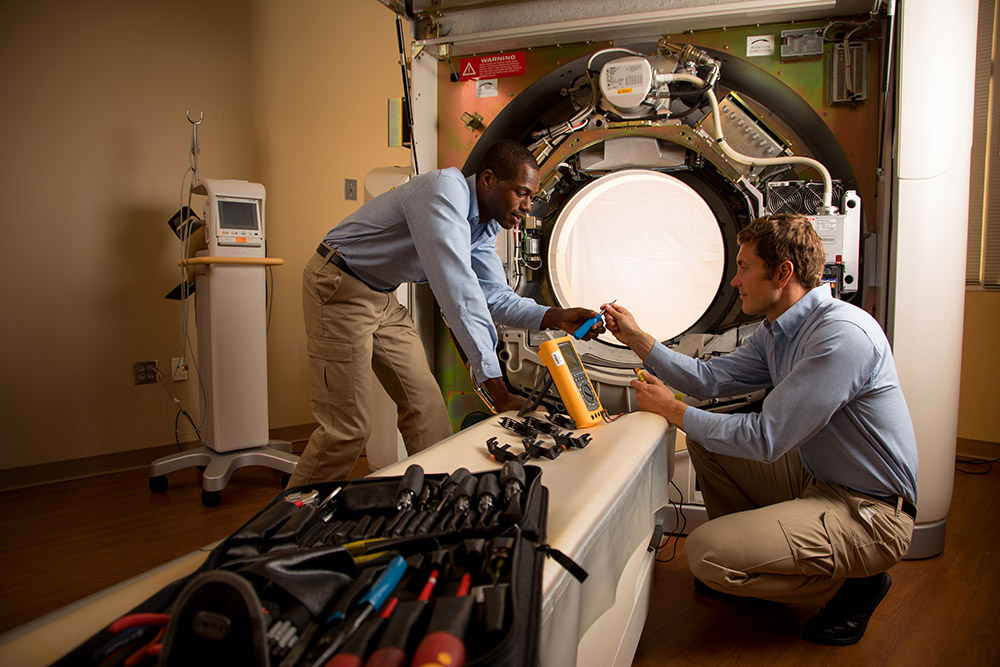
Ensuring imaging equipment is maintained and calibrated to deliver optimal image quality enables accurate diagnoses. Through meticulous management and maintenance, HTM ensures that diagnostic equipment, such as MRI machines, CT scanners, and ultrasound devices, operate at peak performance. For patients, accurate diagnostics mean a faster and more precise understanding of their health issues, leading to appropriate and timely treatments.
Protecting Patient Data Through Proactive HTM Cybersecurity
Cyber threats in healthcare are growing in frequency, scale, and complexity; putting patient data and system reliability at constant risk. As clinical environments become more connected, HTM plays a pivotal role in identifying and addressing vulnerabilities across a wide range of medical devices and systems.
HTM teams implement proactive defense strategies, oversee risk assessments, and ensure that connected devices, from infusion pumps to imaging systems, are secure and compliant. Their work helps prevent unauthorized access, reduce downtime, and protect sensitive patient information. In a healthcare system built on trust, cybersecurity is no longer just an IT issue, it’s a patient experience issue. HTM strengthens that trust by ensuring the technology behind care is both reliable and secure.
Why HTM Is Essential to the Future of Patient Care
Healthcare Technology Management (HTM) may operate behind the scenes, but its impact is deeply felt at every stage of the patient journey. From reducing delays and improving diagnostic accuracy to supporting clinician efficiency and strengthening cybersecurity, HTM plays a vital role in shaping a safer, more responsive care environment. As healthcare systems continue to advance, HTM will remain essential, not just in managing technology, but in delivering the consistent, patient-centered experiences today’s care standards demand.